

Production of Various Steel Profiles


From Raw Materials to Standards and Engineering Applications
Introduction
Steel profiles are among the most widely used sections in various industries, including construction, machinery manufacturing, metal structures, automotive, and door and window production.
The term “profile” refers to a section with a specific shape and defined length, used in industry to transfer loads, create frameworks, provide protection, or connect components.
Producing steel profiles is a precise engineering process in which steel sheets are formed using rolling machinery. This article examines the step-by-step production process, the types of profiles, their technical features, standards, and engineering applications.
Section One: Steel Profile Production Process
1. Raw Materials
The main raw materials are hot-rolled (HR) or cold-rolled (CR) steel sheets.
The type of sheet is selected based on the type of profile (open or closed) and its application. Factors such as thickness, steel grade (ST37, ST52, galvanized steel, etc.), and coating (stainless, anti-corrosion) influence the selection.
2. Slitting the Sheet into Strips
Sheets arrive as coils and are slit longitudinally or transversely into strips with suitable widths for forming.
3. Cold Roll Forming
The slit strips pass through a series of rollers that gradually form them into the desired profile shape.
This process is performed without heat, preserving the mechanical properties of the steel.
4. Welding (for closed profiles)
For producing closed profiles such as tubes and hollow sections, the strip edges are brought together and welded using resistance or induction welding.
5. Cooling, Straightening, and Cutting
After forming, the profiles are cooled, straightened, and cut to the desired lengths.
They are then packaged and prepared for distribution.
Section Two: Types of Steel Profiles
1. Open Profiles
Sections with an open cross-section used in light structures and frameworks:
-
Angle (L-shape): Two perpendicular sides; used for connections and corner reinforcement
-
Channel (U-shape): Suitable for light beams, chassis, and frames
-
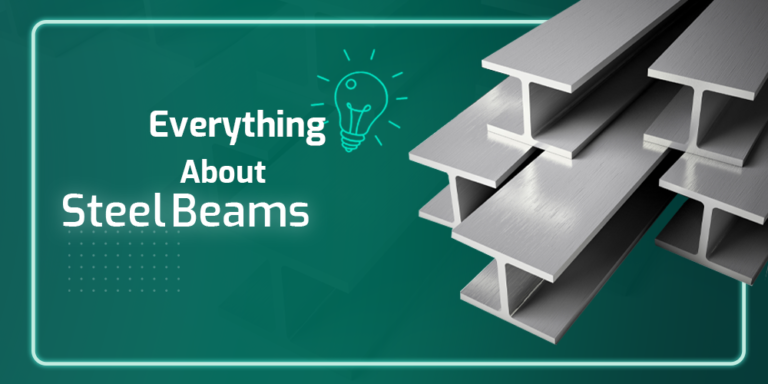
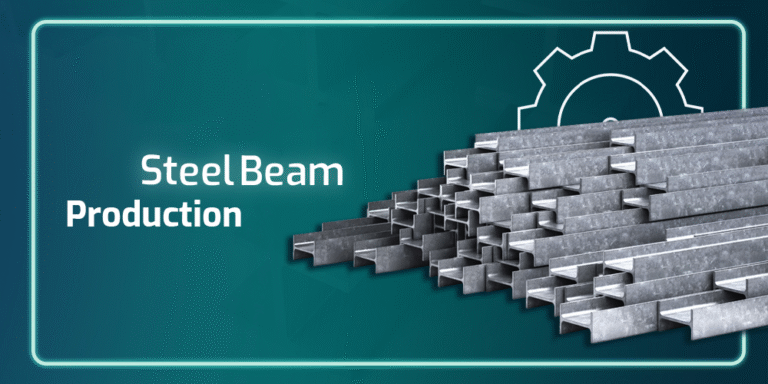
I-beam: Used in construction for heavy-load bearing
-
T-section: Common in framing and expansion joint applications
2. Closed Profiles
Sections with a closed cross-section, used in frameworks, doors and windows, automotive chassis, and industrial structures:
-
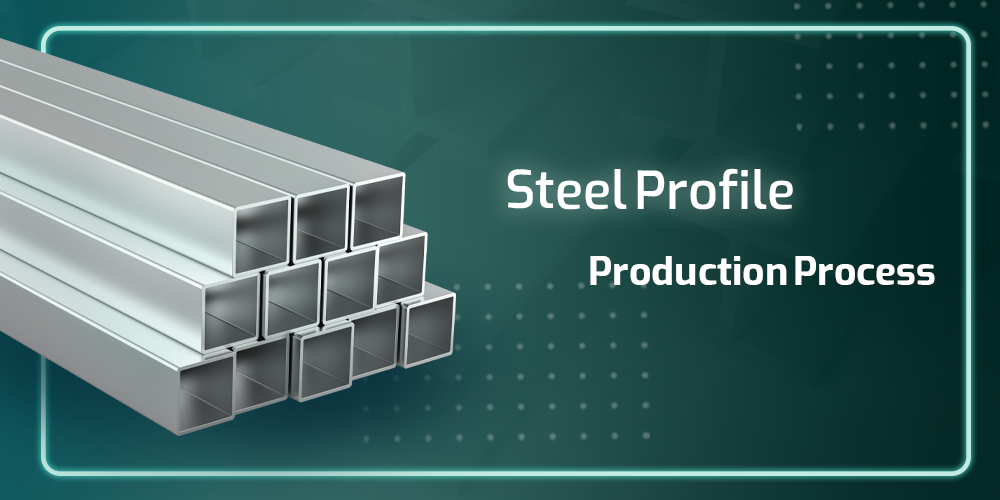
Square and rectangular hollow sections
-
Steel pipes: Used in fluid transmission lines, scaffolding, and automotive applications
-
Door and window profiles: Made from galvanized steel or aluminum for construction use
Section Three: Standards for Profile Manufacturing
Steel profiles must comply with national and international standards, including:
-
DIN (Germany)
-
ASTM (USA)
-
ISIRI (Iran National Standard)
-
EN (Europe)
These standards define dimensional tolerances, steel grade, tensile strength, thickness, and welding methods.
Section Four: Engineering Applications of Steel Profiles
| Profile Type | Main Applications |
|---|---|
| Angle & Channel | Sheds, machinery, columns, light structures |
| Hollow Sections | Doors and windows, railings, vehicle chassis, metal furniture |
| Pipe | Scaffolding, piping systems, gas and water transmission |
| T-section | Roofing systems, interior design, decoration |
| I-beam | Building skeletons, bridges, heavy industrial structures |
Conclusion
Steel profiles serve as the backbone of metal and construction industries.
A precise understanding of their production processes, types, and applications plays a crucial role in optimal selection, engineering design, and cost reduction.
Choosing the right steel sheet, adhering to standards, and ensuring accuracy in forming and welding are key factors in the final quality of steel profiles.