

Scrap Metal: The Grey Gold of the Steel Industry


From Waste to a Vital Raw Material in the Production Cycle
Introduction
In today’s world, recycling has become one of the main pillars of sustainable development and industrial efficiency. Among recyclable materials, scrap iron is considered one of the most important secondary sources for steel production, holding a key position in metallurgy, steelmaking, automotive manufacturing, and construction industries. Although scrap iron is obtained from waste, its high economic value, positive environmental impact, and ability to be recycled repeatedly without losing quality have turned it into the “grey gold” of the steel industry.
1. What is Scrap Iron?
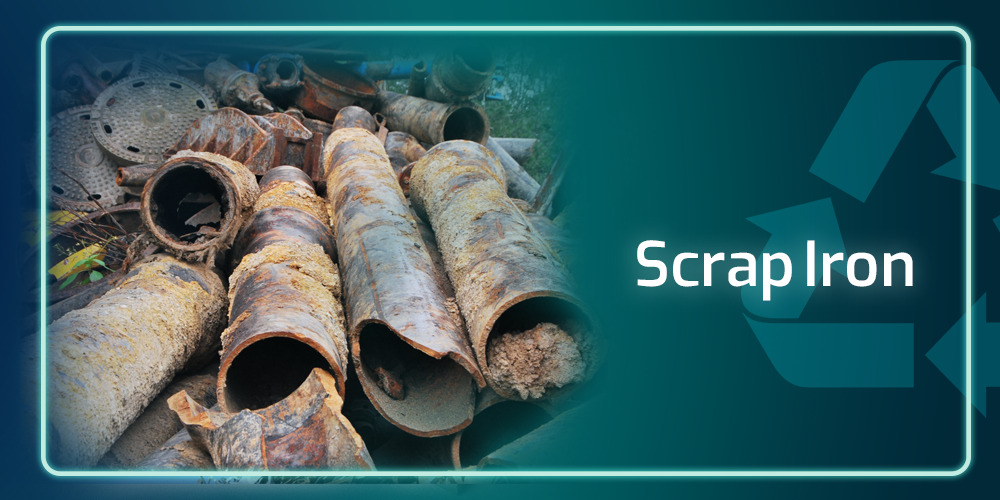
Scrap iron refers to ferrous and steel materials that have reached the end of their useful life or remain as waste during the manufacturing process. These scraps are used as a secondary raw material for producing new steel.
2. Sources of Scrap Iron
Source | Examples
Automotive industry | End-of-life vehicles, worn chassis and bodies
Construction | Demolished steel structures, rebar, I-beams, doors and windows
Industrial factories | Metal shavings, discarded parts, worn machinery
Household use | Refrigerators, stoves, heaters, metal kitchen appliances
3. Types of Scrap Iron
Type | Description
Heavy scrap (HMS) | Large and thick pieces such as beams, rebars, pipes
Light scrap | Thin sheets, shavings, production waste
Industrial scrap | Fresh waste from cutting and machining
Household scrap | Worn or unusable metal items from homes
Alloy scrap | Pieces containing chromium, nickel, or other metals requiring separation
4. Scrap Iron Recycling Process
General steps:
-
Collection: From workshops, factories, scrapyards, and waste-sorting centers
-
Separation: Using magnets, screening, and mechanical systems
-
Shredding: Breaking scraps into smaller pieces for easier melting and transport
-
Melting: In electric arc furnaces or induction furnaces
-
Refining: Removing impurities to produce high-quality steel
-
Casting: Converting the melt into billets, sheets, rebars, and other steel products
5. Importance of Scrap Iron in the Steel Industry
Advantage | Description
Energy saving | Producing steel from scrap requires up to 70% less energy
Lower production cost | Scrap is cheaper than iron ore and direct-reduced iron
Environmental protection | Less mining and reduced greenhouse gas emissions
Better availability | Scrap is always widely accessible
6. Challenges of Using Scrap Iron
Challenge | Description
High impurities | Requires precise refining
Quality variation | Some scraps are alloyed or rusty
Transport difficulty | Large pieces require shredding and industrial loading
Price fluctuation | Affected by global steel prices and currency rates
7. Applications of Scrap Iron in Industry
• Steelmaking (electric arc furnaces)
• Production of rebar, beams, sheets, and pipes
• Automotive manufacturing (recycled or remelted parts)
• Home appliances and agricultural equipment
• Export to steel-consuming countries
8. Scrap Iron in Iran
With a large steel industry and growing use of electric arc furnaces, Iran consumes millions of tons of domestic and imported scrap yearly. Despite rising demand, the lack of modern collection systems and fluctuating prices means Iran needs better infrastructure and clearer regulations for efficient scrap management.
Conclusion
Although scrap iron comes from waste, it is one of the most valuable resources in the steel industry. Recycling it reduces production costs, preserves natural resources, and contributes to sustainable development. Investing in smart scrap management is a strategic step toward a cleaner, more efficient industrial future.