

Sponge Iron: Production Process and Applications in the Steel Industry


Complete Review of One of the Key Raw Materials in Steel Production
Introduction
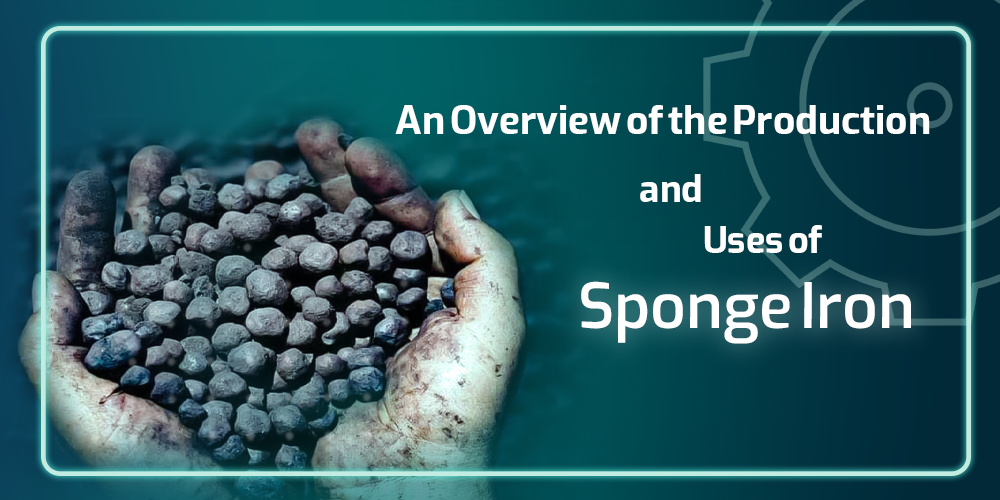
In the process of steel production, one of the most important raw materials used is sponge iron. This material is considered an economical and environmentally friendly substitute for scrap metal and pig iron in many steel plants. In fact, sponge iron is a semi-processed product derived from iron ore that is directly reduced—without melting—and used as feed in steelmaking furnaces, especially induction furnaces and electric arc furnaces.
1. What Is Sponge Iron?
Sponge iron is a type of high-purity iron (between 85% and 95% metallic iron) obtained through the direct reduction of iron ore. Because of its porous, sponge-like structure, it is known by this name. In this process, iron ore (in pellet or lump form) is reduced—without melting—by natural gas or coal, and its oxygen is removed.
2. Sponge Iron Production Process
Main methods of direct reduction:
a) Gas-based processes (MIDREX and HYL) – the most common method in Iran
-
Natural gas (CH₄) is used as the reducing agent.
-
The gas, in contact with hot pellets, reduces iron oxide to metallic iron.
-
The output is high-purity sponge iron in pellet form.
b) Coal-based process (SL/RN) – common in countries without natural gas
-
Coal is used as the chemical reducing agent.
-
In rotary kilns, materials are reduced and discharged in lump form.
-
This method has higher pollution compared to gas-based reduction.
3. Physical and Chemical Properties of Sponge Iron
| Property | Average Value |
|---|---|
| Metallic iron content (Fe total) | 85–95% |
| Carbon | 0.5–2% |
| Appearance | Porous pellets or lumps |
| Relative density | Lower than pig iron |
| Reactivity | High—prone to ignition when exposed to air |
4. Applications of Sponge Iron
-
Main feedstock for electric arc furnaces (EAF)
-
Steel production in induction furnaces (IMF)
-
Substitute for scrap metal in steelmaking processes
-
Mixed with scrap to improve melt quality
-
Production of hot briquetted iron (HBI) for safer transportation
5. Advantages of Using Sponge Iron in Steelmaking
| Advantage | Explanation |
|---|---|
| High purity | Low impurities such as sulfur and phosphorus |
| Uniform chemical composition | Better control over final steel quality |
| Greater availability than scrap | Particularly in countries with limited scrap supply |
| Lower pollution (gas-based methods) | Cleaner than blast furnace or coal-based routes |
| Reduced greenhouse gases | Especially in MIDREX due to natural gas use |
6. Disadvantages and Challenges
-
High flammability, especially at ambient temperature and when exposed to moisture
-
Requires special storage systems (silos, cooling systems)
-
Needs high-quality natural gas or coal
-
High initial investment cost for direct reduction units
7. The Future of Sponge Iron in the Steel Industry
With the global shift away from blast furnaces and toward green steel, the use of sponge iron—especially via gas-based reduction—has a promising future. Many countries are investing in direct-reduction technologies to produce high-quality steel while reducing environmental pollution.
Conclusion
Sponge iron is a key material in modern steelmaking. By producing iron from ore without the need for melting during reduction, it is both energy-efficient and a cleaner alternative to traditional methods. Its widespread use in Iran, due to access to natural gas, also strengthens the country’s strategic position in the global steel supply chain.