

Difference Between Plain and Deformed Rebars in Concrete


Scientific and Practical Analysis of the Role of Rebars in Reinforced Concrete Structures
Introduction
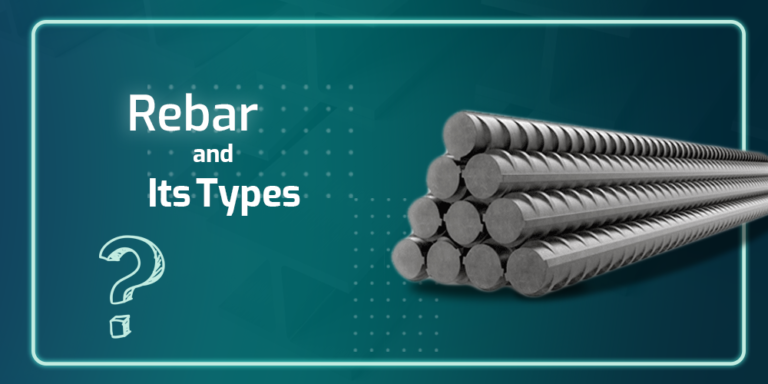
In reinforced concrete structures, rebars act as the backbone of the concrete. Although concrete has high compressive strength, it is weak in tension. Rebars compensate for this weakness by carrying tensile forces. Rebars are produced in two types: plain and deformed, but their differences go beyond appearance; their performance in concrete, bonding ability, structural resistance, and their applications also vary.
This article provides a complete analysis of the difference between plain and deformed rebars in terms of their performance in concrete.
1. Basic Definition of Plain and Deformed Rebars
Plain Rebar
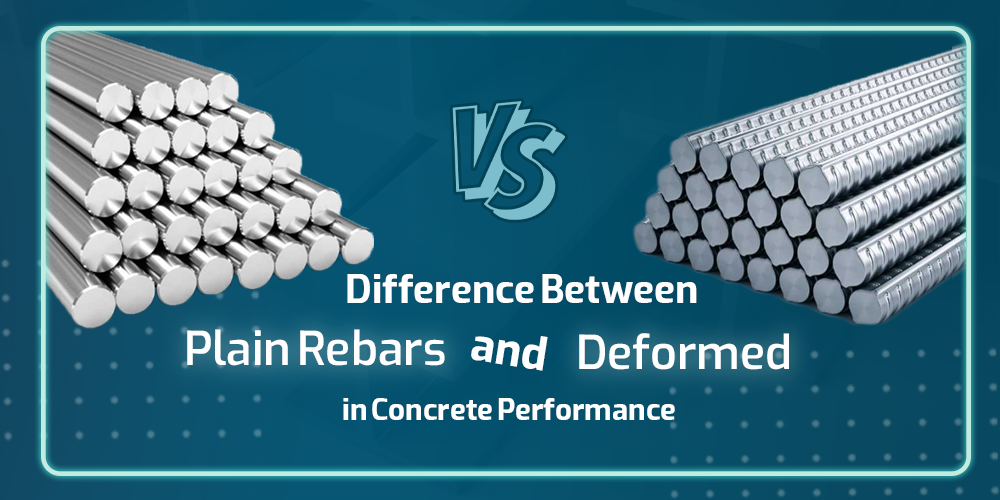
It has a smooth surface without ribs. It moves easily within the concrete and is mainly used in cases where high bonding is not needed or where the bar must be bent or welded.
Deformed Rebar
It has ribs or patterned projections on the surface that create better bonding with concrete. These rebars are the standard type for reinforced concrete structures and are commonly used in building frameworks.
2. Differences in Performance Within Concrete
Characteristics — Plain Rebar / Deformed Rebar
• Bonding with concrete: low – easily slips / high – locks into the concrete
• Effective tensile resistance: relatively lower due to higher slippage / better force transfer to concrete
• Behavior during earthquakes: weaker – prone to displacement / better – mechanical interlocking
• Applications: stirrups, holders, mesh / longitudinal bars, foundation, columns, beams
• Long-term resistance: lower due to slipping / higher due to mechanical anchorage in concrete
3. Bonding Performance: The Core Difference
The most important difference between plain and deformed rebars is the degree of adhesion and friction between the rebar and the concrete.
In concrete structures, loads must transfer from the concrete to the rebar. If the rebar has a smooth surface (plain), it may slip under loading and fail to transfer stresses effectively. But the ribs on deformed rebars act like hooks that grip the concrete, allowing much better force transfer.
4. Impact on Reinforced Structures
• In steel or concrete frameworks subjected to lateral loads such as earthquakes, deformed rebars are the standard choice because of their superior shear and tensile performance.
• Using plain rebars in these situations may lead to structural failure at the rebar–concrete interface.
5. Practical Notes and Proper Selection
• Plain rebars are recommended for use in stirrups, ties, supports, or low-stress reinforcement.
• Deformed rebars must be used in all load-bearing components such as beams, columns, foundations, and shear walls.
• When precise welding or bending is required, plain rebars are more suitable because of their higher flexibility.
Conclusion
Choosing between plain and deformed rebars should not depend solely on cost or availability. Instead, one must consider the expected performance in concrete, the type of structure, the placement of the rebar, and the applied loads.
Deformed rebar—due to its superior mechanical bonding—is the global standard for reinforced concrete construction and plays a key role in the strength and durability of buildings.
Plain rebar, despite its limitations, remains useful and valuable in applications that match its characteristics.