

Tie Reinforcement in Concrete Structures


Role, Implementation, and Importance of Tie Reinforcement in Concrete Structures
Introduction
In reinforced concrete structures, rebars are the primary components resisting tensile, shear, and thermal forces. Alongside the main longitudinal and transverse rebars, a specific type called tie reinforcement or secondary rebar exists. Although it does not carry the main load by itself, tie reinforcement plays a key role in maintaining rebar cohesion, distributing stress, controlling cracks, and ensuring concrete integrity. This article provides a comprehensive overview of the application, importance, types, and execution guidelines of tie reinforcement.
1. What is Tie Reinforcement?
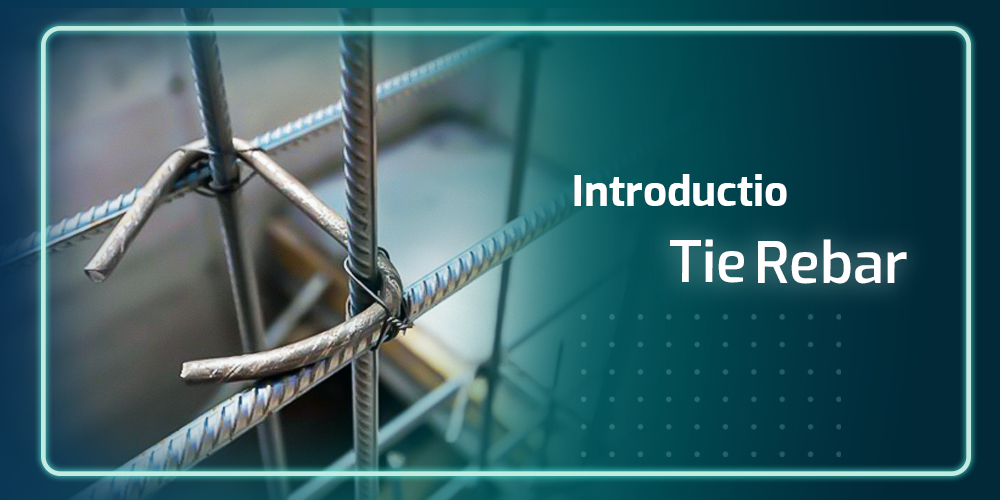
Tie reinforcement refers to rebars used to connect, hold, and fix the main rebars in position before concrete pouring. These rebars usually have smaller diameters (6–10 mm) and are placed horizontally or diagonally within the rebar network.
2. Objectives of Using Tie Reinforcement
| Objective | Explanation |
|---|---|
| Stabilizing rebar position | Prevents displacement during concrete pouring |
| Maintaining standard spacing | Ensures proper concrete cover and accurate spacing |
| Crack control | Especially in slabs, due to temperature changes or concrete shrinkage |
| Integrating the rebar network | Connects longitudinal and transverse rebars together |
| Improving construction quality | Prevents bending or deformation of the network during installation |
3. Applications of Tie Reinforcement
-
Concrete slabs (floors and ceilings)
-
Strip or raft foundations
-
Shear walls or retaining walls
-
Concrete stairs and ramps
-
Special columns or large formworks
4. Methods of Tying Rebars
| Method | Tool | Explanation |
|---|---|---|
| Binding wire (manual) | Pliers or rebar hook | Most common method using thin galvanized wire |
| Plastic clips | Hand or clip gun | Used in light or industrial projects |
| Spot welding | Welding machine | Only for weldable rebars and with engineer approval |
Note: Welding is prohibited for high-carbon rebars or critical areas unless approved by design and standards.
5. Technical Specifications of Tie Reinforcement
| Feature | Recommended Values |
|---|---|
| Diameter | Typically 6, 8, or 10 mm |
| Spacing | 20–30 cm in slabs |
| Concrete cover | 2.5–5 cm depending on location |
| Ribbed or plain | Both usable; ribbed provides better engagement |
6. Difference Between Tie Rebar and Thermal Rebar
| Tie Rebar | Thermal Rebar |
|---|---|
| Used to hold main rebars in place | Used to control cracks caused by heat |
| Installed before concrete pouring | Usually in horizontal slabs and floors |
| Not always specified in design | Often indicated in engineering drawings |
7. Important Construction Notes
-
Tie reinforcement must ensure that the rebar network does not shift during concrete pouring.
-
Using concrete blocks or spacers is recommended to maintain proper cover.
-
Rebar ends should not be sharp to avoid damaging concrete cover.
-
Inspection and approval of tie placement by the supervising engineer are mandatory before pouring concrete.
Conclusion
Although tie reinforcement may seem simple, it is a hidden yet critical component in concrete structures. Proper installation, accurate positioning, and correct tying significantly impact the final performance of the structure. Following standards, employing skilled personnel, and continuous inspection during rebar installation ensures durability, safety, and enhanced structural performance under loads and stresses.