

Introduction to Different Standards of I-Beams


Review of I-Beam Specifications, Applications, and Standard Differences in Construction and Engineering
Introduction
I-beams are among the most essential steel profiles used in construction and structural engineering. Choosing the appropriate type of I-beam not only affects structural strength but also plays a key role in proper execution, safety, and cost efficiency. I-beams are produced according to various international and national standards, each with distinct characteristics, flange and web thickness, and load-bearing capacity. This article introduces the main I-beam standards and their differences.
Types of I-Beam Standards
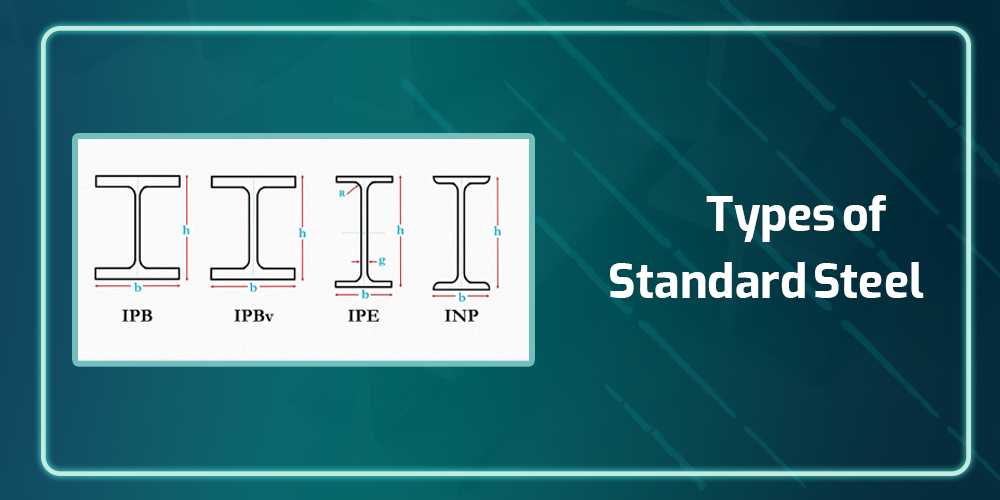
1. IPE – Normal I-Beam (European)
-
Full Name: I-Profile Europe
-
Shape: Narrow web, medium flanges, constant flange thickness
-
Characteristics: Flanges are completely parallel with no slope
-
Applications: Secondary beams, building frameworks, trusses
-
Common Regions: Iran, Europe, and the Middle East
-
Note: Most commonly used type in Iran
2. INP – Sloped Flange I-Beam (China/Russia)
-
Full Name: I-Profile Normal (Russia/China)
-
Shape: Sloped flanges; flange thickness decreases from web to edge
-
Characteristics: Lighter than IPE, weaker in torsion resistance
-
Applications: Lightweight or low-cost projects, local reinforcement
-
Common Regions: Russia, China, some Asian countries
-
Note: Its use in Iran has decreased in recent years
3. IPB – Wide Flange or H-Beam (HEB / HEA)
-
Full Name: I-Profile Broad Flange (H-Beam)
-
Shape: Flanges wider than IPE, H-shaped profile
-
Types:
-
HEA: Light (thinner flanges)
-
HEB: Medium-heavy (thicker flanges)
-
HEM: Heavy-duty (thick flanges, high load capacity)
-
-
Applications: Industrial structures, bridges, columns, and heavy loads
-
Common Regions: Europe, major engineering projects in Iran
-
Note: Wide flanges provide higher torsional and bending resistance
Comparison of I-Beam Standards
| Standard | Profile Shape | Flanges | Bending Resistance | Weight | Country of Origin |
|---|---|---|---|---|---|
| IPE | I | Parallel | Medium | Medium | Europe / Iran |
| INP | I | Sloped | Lower | Lighter | China / Russia |
| IPB (HEA/HEB) | H | Wide | High | Heavier | Europe / Iran |
Selecting the Right I-Beam for Your Project
| Project Type | Recommended I-Beam | Reason |
|---|---|---|
| Residential buildings | IPE | Common, economical, easy to implement |
| Industrial & heavy structures | HEB / HEA (H-Beams) | High load capacity, resistant to shear forces |
| Lightweight or temporary projects | INP | Lightweight, low cost |
| Critical load-bearing columns | HEB / HEM | High compressive and bending strength |
Important Tips When Purchasing Standard I-Beams
-
Check the brand and manufacturer: Reputable domestic brands, such as Zob Ahan Isfahan, produce I-beams with precise specifications.
-
Inspect the stamped label and standard marking: Standard I-beams are marked with the factory name, standard number, and size.
-
Ensure compliance with engineering drawings: Each type of I-beam should match the structural engineer’s design.
-
Earthquake resistance: IPB beams are more suitable for seismic-resistant structures due to their shape and design.
Conclusion
Understanding I-beam standards not only helps in selecting the right profile but also ensures safety, durability, lower maintenance costs, and proper execution of construction projects. Using I-beams according to recognized standards guarantees the quality of any structural work.