

The impact of fire on concrete and steel structures
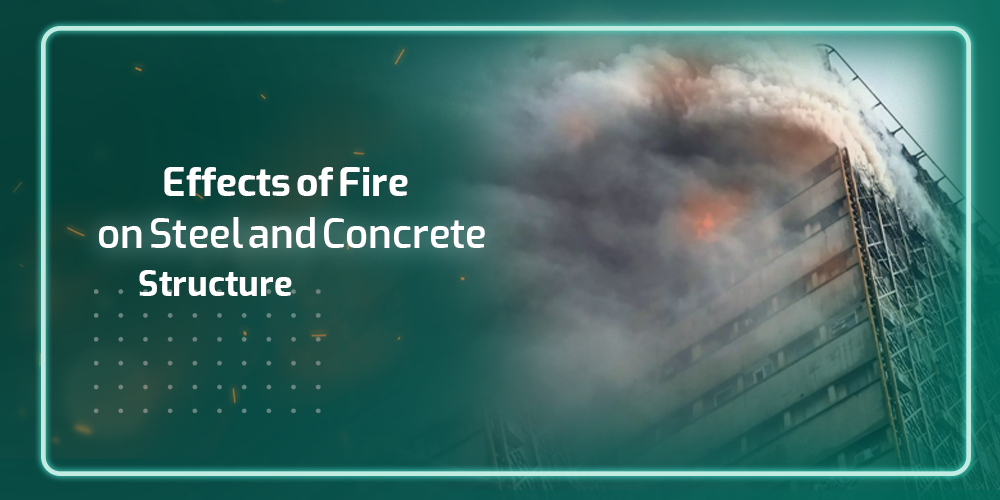


Comparison of Building Response to Fire and the Importance of Safety in Design
Introduction
Fire is one of the most dangerous events that can threaten both human lives and the stability of buildings. The type of structural material (concrete or steel) plays a significant role in the level of vulnerability. This article explains, in simple terms, how concrete and steel structures respond differently to fire and why fire safety should be a key consideration in design and construction.
Why is Fire Dangerous?
When a fire occurs in a building, the temperature can quickly rise above 600 to 1000°C. Under such conditions, construction materials may deform, lose strength, crack, or even collapse.
How Concrete Structures React to Fire
-
Concrete is more resistant to direct heat. It heats up slowly and does not spread flames.
-
However, at very high temperatures, the steel reinforcement inside concrete (which provides tensile strength) can become hot and weaken.
-
Concrete may also experience cracking or surface spalling, which reduces the structural capacity.
-
Overall, concrete buildings provide more time for evacuation and emergency exit.
How Steel Structures React to Fire
-
Steel is very sensitive to heat. When steel reaches around 500°C, its strength drops to half.
-
At high temperatures, steel softens, bends, and may collapse rapidly.
-
Unprotected steel structures can become unstable in less than 30 minutes.
-
Therefore, fireproof coatings on steel beams and columns are essential.
Overall Comparison of Structural Performance in Fire
| Feature | Concrete Structure | Steel Structure |
|---|---|---|
| Heat transfer rate | Low | High |
| Stability during fire | Longer | Shorter |
| Deformation under high heat | Surface cracking | Bending or rapid collapse |
| Need for fireproof coating | Usually not | Absolutely essential |
| Evacuation time | Longer | Possibly shorter |
How to Improve Fire Safety in Buildings
-
Use heat-resistant construction materials.
-
Apply fireproof coatings to steel structures (paint, plaster, or fireproof concrete).
-
Install fire detection and suppression systems.
-
Separate high-risk areas (like kitchens or electrical rooms) from the rest of the building.
-
Train occupants on emergency evacuation procedures.
Conclusion
No building is completely fireproof, but understanding the behavior of materials like concrete and steel under fire allows for safer design. Concrete structures are generally more fire-resistant, but the steel reinforcement can pose risks if it becomes hot. Steel structures are lightweight and quick to construct but more vulnerable to fire. Paying attention to fire safety principles ensures the protection of human lives and preservation of assets.