

Assessment of the required rebar for buildings



Assessment of the Required Rebar for Buildings
Rebar is one of the main components used in concrete structures, and choosing the right type, quantity, and diameter has a direct impact on the final strength of a building. Since rebar provides resistance against tension, its combination with concrete—which is strong under compression—plays a vital role in the overall stability of the structure.
In this article from Pak Felez, we examine the key factors involved in determining the required rebar for buildings.
Factors Influencing the Required Amount of Rebar
The main factors that determine the amount of rebar needed include:
1. Type of Structure
The purpose of the building (residential, commercial, or industrial) plays an important role in determining rebar consumption. For example, high-rise buildings or structures with special functions require significantly more reinforcement.
2. Structural Design
Engineering drawings and structural calculations are the primary references for selecting both the quantity and type of rebar. Structural engineers determine the required reinforcement by considering applied loads, loading conditions, and environmental factors.
3. Floor Area
A larger floor area naturally increases the amount of rebar used. In multi-story buildings or structures with large built-up areas, considerable quantities of rebar are required in foundations, columns, beams, and slabs.
4. Type of Roof and Structural System
The choice of roof type (such as joist-block systems, concrete slabs, or composite floors) and the structural system (concrete or steel) also directly affects the quantity and type of rebar used.
Approximate Rebar Consumption
On average, in standard concrete buildings, 40 to 65 kilograms of rebar are required per square meter of floor area. This amount may increase or decrease depending on the design and nature of the structure.
For accurate estimation, the structural drawings must be reviewed by a structural engineer, and the exact rebar list—including diameter, quantity, and length—should be determined using bar bending schedules (BOQ).
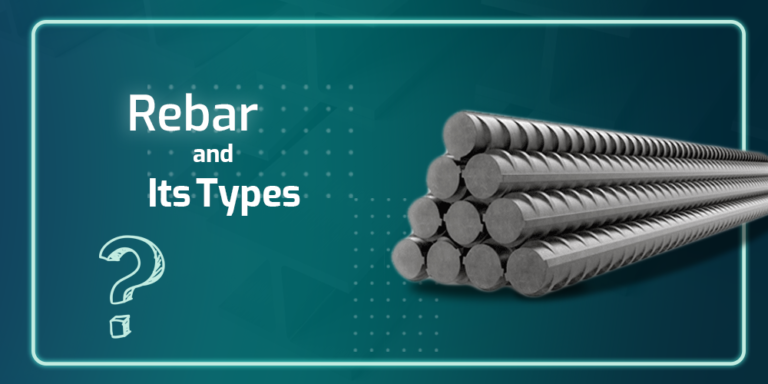
Types of Rebar Commonly Used
In typical construction projects, the following types of rebar are used:
-
A1 (Plain rebar): Used for stirrups and temperature reinforcement.
-
A2 and A3 (Ribbed rebar): Used as main longitudinal reinforcement in foundations, columns, beams, and walls.
-
A4: Used in special projects requiring higher strength.
Conclusion
Every building requires reinforcement appropriate to its design, loads, and structural system. The exact estimation of rebar quantity and type must be carried out by a structural engineer. Choosing high-quality, standard-compliant rebar ensures the safety, durability, and long-term performance of any structure.