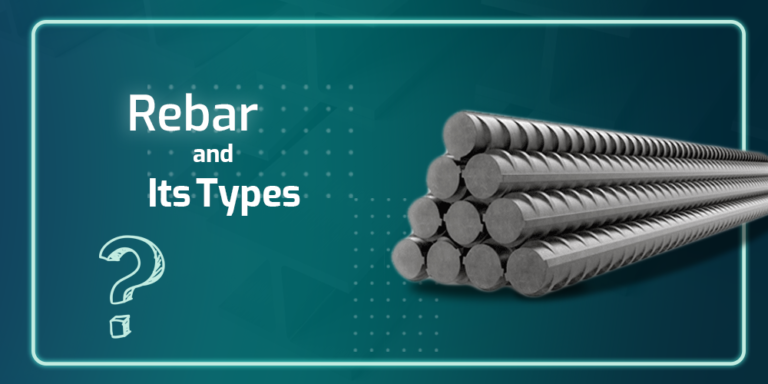


A specialized guide to rebar production and an introduction to its types



Rebar (Steel Reinforcement): Production Guide and Types
Rebar, also known as reinforcement steel, is one of the essential components used in concrete structures to compensate for concrete’s weakness in tension. Using rebar in reinforced concrete significantly increases the structure’s resistance against tensile, compressive, torsional, and bending forces. For this reason, understanding the production process of rebar, common standards, and its various types is crucial for civil engineers, project contractors, and industrial buyers.
Raw Materials for Rebar Production
The primary material used in rebar manufacturing is steel billets, typically produced from low-carbon steel or alloy steel. These billets usually have cross-sectional sizes of 100×100, 125×125, or 150×150 millimeters and come in standard lengths of 6 or 12 meters.
The chemical composition of ST37 and ST52 steel generally includes:
carbon in the range of 0.15 to 0.3 percent,
manganese between 0.5 and 1.3 percent,
silicon between 0.15 and 0.35 percent,
and phosphorus and sulfur kept at less than 0.05 percent.
Rebar Production Process
1. Charging and Preheating
Billets are placed into flame-fired or induction furnaces and heated to temperatures between 1100 and 1250°C so they can be prepared for the rolling process.
2. Primary Rolling
The heated billets enter roughing stands where their cross-section is reduced and shaped closer to a round billet.
3. Intermediate and Final Rolling
The billet passes through intermediate and finishing rolling stands until it reaches the required diameter (for example, 12 mm or 16 mm). During this step, the surface ribs are also formed.
4. Cutting
The produced rebars are cut with mechanical or hydraulic guillotines into 12-meter lengths or according to customer requirements.
5. Cooling
The rebars are then placed on cooling beds where air-cooling helps them achieve optimal mechanical properties.
6. Packaging and Quality Control
Rebars undergo mechanical testing—such as tensile, bending, and hardness tests—as well as chemical analysis. After passing quality checks, they are bundled and labeled.
Types of Rebar Based on Shape and Mechanical Properties
Plain Rebar (A1)
-
Smooth surface without ribs
-
High ductility
-
Suitable for bending, welding, and making stirrups
-
Yield strength: around 230 MPa
Spiral-Ribbed Rebar (A2)
-
Oblique rib pattern
-
Good tensile strength
-
Yield strength: around 340 MPa
-
Commonly used in standard reinforced concrete
Chevron (V-Shaped) Ribbed Rebar (A3)
-
Rib pattern in diagonal or cross shape
-
High resistance against bending
-
Yield strength: around 400 MPa
-
Suitable for beams and columns
-
Less ductile than A2
Compound Ribbed Rebar (A4)
-
Complex rib pattern and the highest strength grade
-
Yield strength: above 500 MPa
-
Recommended for special projects, seismic zones, and critical conditions
-
Welding is generally not recommended
Rebar Production Standards
Rebars are produced based on several international and national standards, including:
-
ISIRI 3132 (Iran National Standard)
-
ASTM A615 / A706 (United States)
-
DIN 488 (Germany)
-
BS 4449 (United Kingdom)
-
JIS G3112 (Japan)
Main Applications of Rebar
-
Reinforcing concrete structures in construction projects
-
Use in bridges, tunnels, dams, and large infrastructures
-
Application in beams, columns, slabs, and foundations
-
Strengthening and retrofitting existing structures
-
Use in casting, molding, and industrial manufacturing
Key Considerations When Purchasing Rebar
-
The identification marks embossed on the rebar must clearly show the brand, grade, and size.
-
The product must comply with national standards, especially in government or supervised projects.
-
The bundle weight should match standard weight charts.
-
The rebar must be free of rust, deformation, or bending defects.
-
For humid or coastal regions, galvanized or epoxy-coated rebar is recommended.
Major Rebar Manufacturers in Iran
-
Khorasan Steel (Neyshabur)
-
Esfahan Steel Company
-
Kavir Kashan Steel
-
Miyaneh Steel
-
Shahrood Steel
-
Bonab Steel
Conclusion
Rebar is one of the most important components in concrete construction, and its quality directly impacts the safety and durability of a project. Understanding its production process, the different mechanical grades, and the relevant standards—along with purchasing from reputable manufacturers—ensures the performance, reliability, and long-term safety of civil engineering structures.